
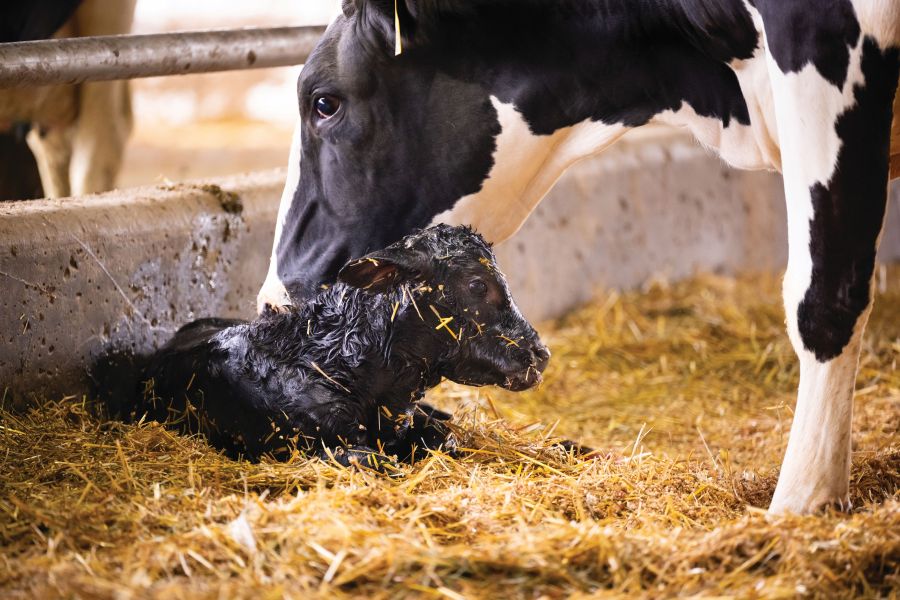
Beef on dairy success: ADSA Conference 48 insights
This year’s Discover Conference brought together more than 200 experts to take a deep dive into the booming beef on dairy sector. With food demand rising and margins tightening, efficiency is critical. Our efforts impact food production, food security, the...

How top dairies boost herd health and productivity
Year one with CowManager® is often about trust. Year two is about unlocking potential. Once CowManager is installed, producers spend the first several months learning the alerts, understanding the technology, and building confidence in the system. The CowManager ear...
The opportunity most dairies still overlook
Cow pregnancy rates have increased substantially over the past 30 years, with award-winning herds achieving pregnancy rates as high as 47%. Surprisingly, heifer-pregnancy rates have not kept pace, and that’s where many dairies are still leaving money on the table. The...
Research shows FerAppease® improves feed efficiency at weaning
A new independent study from Olds College of Agriculture & Technology (Alberta, Canada) shows that FerAppease®, a unique analogue of the naturally occurring Maternal Bovine Appeasing Substance (mBAS), improves feed efficiency, weight gain, rumination time and...
How egg-based IgY and colostrum IgG work together to protect calf gut health
The uniqueness of CONVERT™ Day-One Calf Gel results from three distinct components: 1) the profile of beneficial bacteria, 2) Agrarian Solutions’ proprietary cell-wall deficient bacteria, and 3) the use of IgY or egg-derived antibodies. The science supporting IgY...
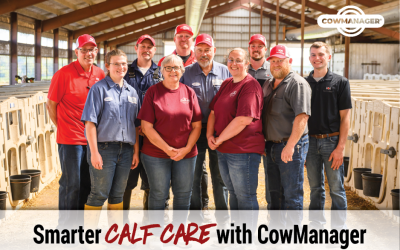
Smarter calf care with CowManager
Technology is helping Hanke Farms take calf care to the next level. At the sixth-generation dairy in Sheboygan Falls, Wis., CowManager® is proving just as valuable for the youngstock as it has been for the cows. Now in its sixth generation, the Hanke and Taylor family...
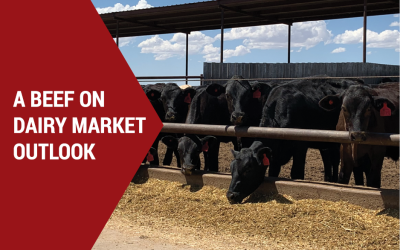
The price is right … but will it always be?
It’s no secret why beef on dairy calf prices soared higher in 2025. The beef-cow herd, reduced by mass liquidations over the past few years due to drought, input costs, and interest rates, was at its smallest in decades at just 27 million (Figure 1). This decline has...